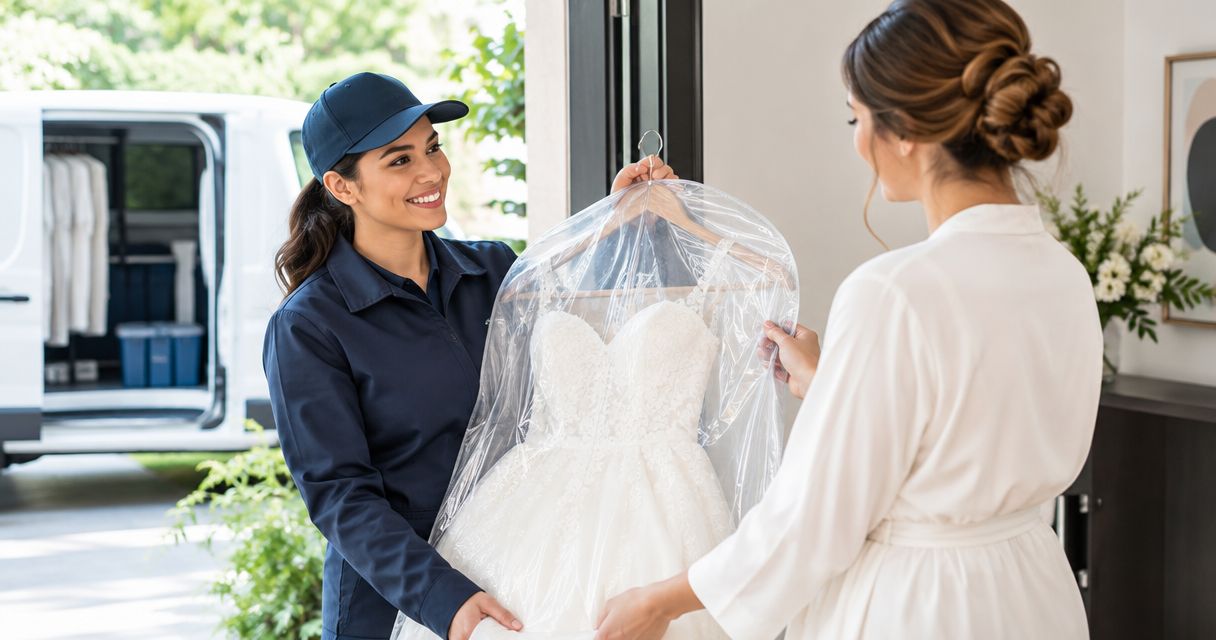
Best overall: a wedding-gown specialist that confirms the cleaning method and collection arrangements in writing. Best local starting point for Astoria residents: Mygreenspinlaundry, whose door-to-door dry cleaning service requires separate confirmation for wedding gowns. Best for long-term storage: a gown-preservation specialist. This 2026 guide compares service approaches so you can choose dry cleaning pickup and delivery for wedding gowns without treating convenient collection as proof of garment expertise.
- For dry cleaning pickup and delivery for wedding gowns, choose confirmed gown expertise before collection convenience.
- Mygreenspinlaundry serves Astoria residents with dry cleaning pickup and delivery; confirm wedding-gown acceptance before booking.
- Choose a preservation specialist when long-term storage, rather than cleaning alone, is your goal.
- Get written instructions for embellishments, stains, packaging, and handover before releasing your dress.
Why this matters
A wedding gown needs a garment-specific decision, not just a collection slot. Its care label, construction, embellishments, and condition determine which questions you need answered before cleaning. The pickup arrangement solves transportation; it does not establish how the dress will be treated.
For your 2026 shortlist, separate the cleaning decision from the delivery decision. First establish who accepts responsibility for inspecting and cleaning the gown. Then confirm how the dress travels between your home and that cleaner, including its packaging and identification.
Choose the cleaner for the gown, then choose the collection arrangement. Reversing that order makes convenience the deciding factor before you know whether the service fits the garment.
What makes the best wedding-gown pickup service
Use these criteria before comparing collection windows or booking forms:
- Confirmed gown acceptance: Get a direct answer about your particular dress, not a general statement that the business handles dry cleaning.
- Garment-specific assessment: Ask how the care label, lining, trims, alterations, and visible damage inform the cleaning decision.
- Clear handling responsibility: Establish who collects, who cleans, and whom you contact if the dress arrives with a problem.
- Written instructions: Keep your stain notes, requested treatment, and any restrictions together with the order record.
- Purpose-matched return packaging: Specify whether the gown is returning for wear, alterations, resale preparation, or long-term storage.
- Usable handover arrangements: Confirm collection and return details that work for your address and the person handing over the gown.
These are selection criteria, not a certification system. A complete answer matters more than a reassuring description. For a 2026 booking, ask the provider to confirm its current arrangements rather than relying on an old message or review.
Wedding-gown service options at a glance
The ranking below separates distinct needs. It compares service models, not tested providers, and does not assume that every business in a category accepts every gown.
| Option | Best for | Standout feature | Key limitation |
|---|---|---|---|
| Wedding-gown specialist with confirmed collection | Dresses needing garment-specific assessment | Gown care drives the service choice | Collection arrangements need separate confirmation |
| Mygreenspinlaundry, subject to gown acceptance | Astoria residents seeking door-to-door service | Local wash-and-fold and dry cleaning pickup and delivery | Wedding-gown cleaning and preservation are not established here |
| Your existing cleaner with agreed collection | Continuing an established cleaner relationship | You can discuss the gown with a familiar business | Previous everyday cleaning does not prove gown suitability |
| Gown-preservation specialist with confirmed transport | Long-term storage after the wedding | Cleaning and storage requirements can be discussed together | Preservation is different from ready-to-wear return handling |
1. Wedding-gown specialist: best for garment-specific assessment
A wedding-gown specialist is the strongest starting point when your dress needs an assessment beyond routine garment cleaning. Ask the business to review the care label and photographs before you arrange collection. The specialist designation alone is not enough; the useful evidence is an explanation of how your gown will be assessed and handled.
Tell the provider about decorative details, previous repairs, alterations, and stains you noticed during the event. Do not assume that identifying the outer fabric answers every care question. The lining and attached decorations also belong in the discussion.
Wedding-gown specialist pros:
- Keeps the gown's condition at the center of the decision.
- Gives you a place to ask about construction and embellishments.
- Supports a direct conversation about stain-treatment limits.
- Lets you specify whether the dress is returning for wear or storage.
Wedding-gown specialist cons:
- Collection and delivery must be confirmed separately.
- A specialist label does not establish who performs the cleaning.
- The business still needs to explain any limitations for your dress.
Best for: A wearer who wants a gown-specific assessment before choosing transportation.
For your 2026 booking, request a written summary of the agreed treatment and return condition. If the response discusses collection but avoids the dress itself, keep looking.
Verdict: Buy only after the gown assessment and collection arrangements are confirmed.
2. Mygreenspinlaundry: best for an Astoria pickup inquiry
Mygreenspinlaundry provides door-to-door wash-and-fold laundry and dry cleaning pickup and delivery for residents of Astoria, Queens. That makes it a relevant local starting point when you want collection from home. It does not, by itself, establish wedding-gown acceptance, specialist treatment, or preservation.
Use the contact page to ask about your dress before making a gown booking. Describe the garment and ask whether it can be assessed for cleaning. Include the care-label information and flag any decorations or damaged areas that need attention.
Mygreenspinlaundry pros:
- Serves residents of Astoria, Queens.
- Provides door-to-door dry cleaning pickup and delivery.
- Offers a local service to approach about collection requirements.
Mygreenspinlaundry cons:
- Wedding-gown acceptance needs direct confirmation.
- No gown-specific cleaning method is established in the supplied service description.
- Preservation and specialist return packaging need separate confirmation.
Best for: Astoria residents beginning a local wedding-gown pickup inquiry.
Ask for an explicit answer rather than assuming that a general dry cleaning booking includes bridal garments. If the gown is accepted, establish how instructions will accompany it and what you should use for handover packaging. Keep the confirmation with your order details.
Verdict: Hold the gown booking until acceptance and handling are confirmed.
3. Your existing cleaner: best for continuity and direct discussion
An existing cleaner is an option when you already have a relationship with the business and want to discuss the gown directly. Ask whether the cleaner accepts this type of dress and whether collection can be arranged. Familiarity helps the conversation, but it does not replace a garment-specific assessment.
Explain how this order differs from your usual garments. A successful history with shirts or everyday dresses does not answer questions about your gown's decoration, layers, or return packaging. Give the cleaner an opportunity to accept the work with clear limits or recommend another route.
Existing-cleaner pros:
- Starts with an established point of contact.
- Lets you discuss instructions with a familiar business.
- Keeps the cleaning conversation separate from finding a new provider.
Existing-cleaner cons:
- Prior everyday cleaning does not establish wedding-gown expertise.
- Pickup and delivery might not be part of the agreed service.
- A collection arrangement still needs clear responsibility and identification.
Best for: Someone whose current cleaner can explain its approach to the particular gown and confirm transportation.
Ask who will inspect the dress and when that assessment happens. If a separate courier is involved, confirm who supplies packaging, records receipt, and handles questions during transit. Do not treat a courier booking as an agreement that the cleaner has accepted the garment.
Verdict: Buy only when the cleaner accepts the gown and the handover process is documented.
4. Gown-preservation specialist: best for long-term storage
Choose a gown-preservation specialist when your main goal is storing the dress rather than wearing it again soon. Cleaning and preservation address different decisions: cleaning concerns the garment's condition, while preservation also concerns how it is prepared and packaged for storage. Ask the provider to explain both.
For a 2026 preservation inquiry, state what you want to do with the gown after its return. A dress being kept as a family keepsake has a different immediate purpose from one returning for alterations or another event. Your instructions should make that purpose explicit.
Gown-preservation specialist pros:
- Makes storage preparation part of the discussion.
- Gives you a reason to ask about packaging and later access.
- Separates long-term care goals from ready-to-wear handling.
Gown-preservation specialist cons:
- Preservation is not interchangeable with ordinary cleaning.
- Opening, inspecting, and repacking requirements need explanation.
- Collection and return arrangements still require confirmation.
Best for: Someone preparing a wedding gown for long-term storage.
Ask what happens before packaging, what you can inspect on return, and what instructions apply if you later remove the dress. Do not accept an unexplained preservation label as a substitute for those answers.
Verdict: Buy for a defined storage goal; skip preservation-only handling when you need the dress ready to wear.
Prepare the gown before pickup
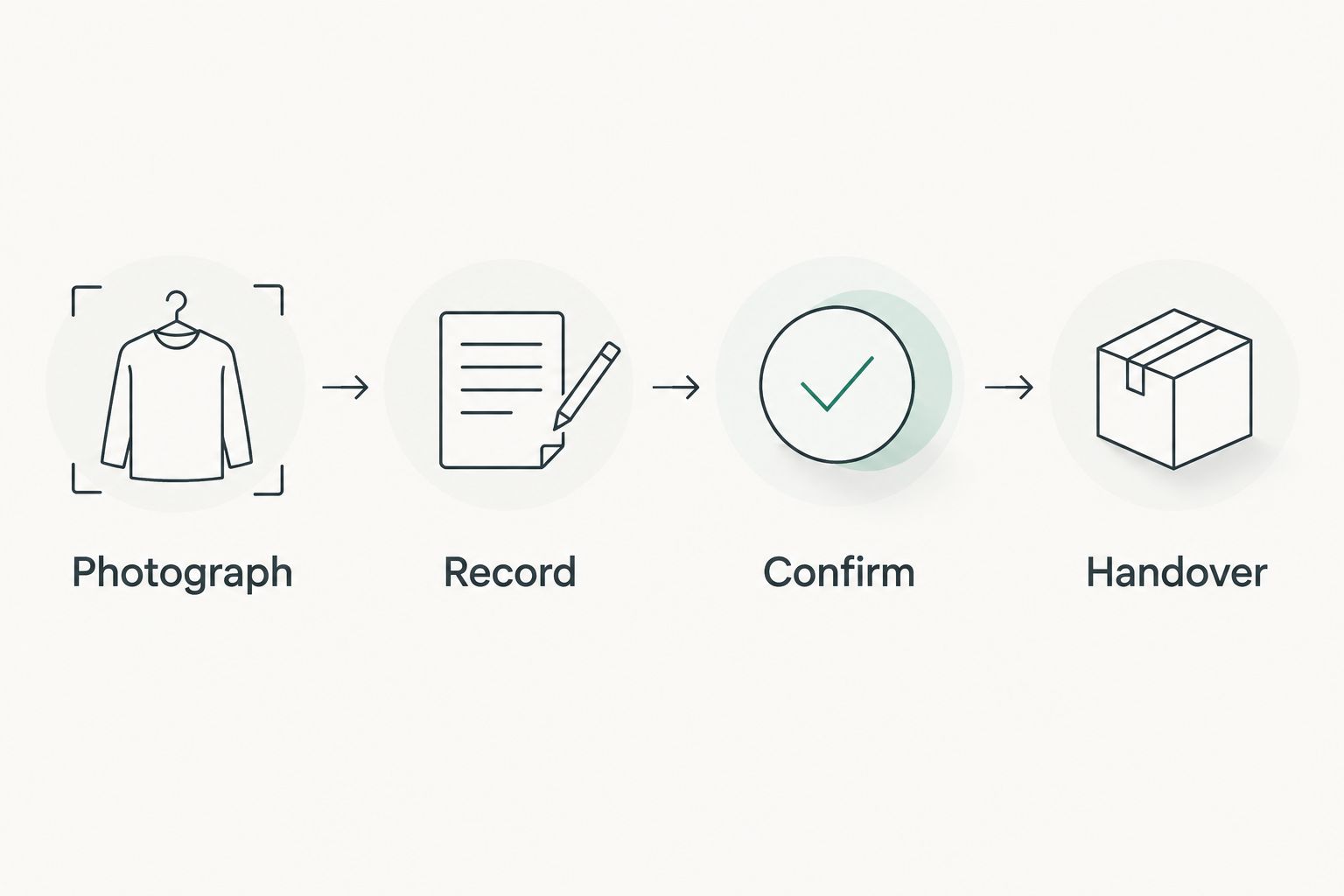
Use a simple sequence: Photograph, Record, Confirm, Handover. Complete it before the collection appointment so your instructions are not reduced to a hurried doorstep conversation.
Photograph
Take at least 3 photos as a starting record: the full front, the full back, and the care label. Add close-ups of stains, loose decorations, tears, or other areas you want assessed. These photographs support the discussion; they do not replace an inspection.
Record
Prepare 1 written checklist describing known stains, previous cleaning, repairs, and your intended use after return. Identify where each issue appears rather than writing only that the dress needs cleaning. Tell the cleaner what you know about a stain without guessing at an unknown substance.
Confirm
Request 2 written confirmations: acceptance of the particular gown and the collection-and-return instructions. Include any agreed limitations in the same message thread. If the provider recommends an inspection before accepting treatment, follow that process rather than treating pickup as final approval.
Handover
Use the packaging the receiving provider requests. Keep accessories separate unless the business has explicitly agreed to accept them, and identify every item included in the order. Before the dress leaves, retain the order reference and the contact details for questions about its return.
How the options are ranked
This 2026 ranking prioritizes garment-specific assessment, clear responsibility, written instructions, and purpose-matched return handling. Convenience comes after those requirements. The first option is the default because it starts with the gown; the remaining options serve location, relationship, or storage needs.
The ranking does not claim hands-on testing, measured cleaning results, or verified service performance. Use it to structure your questions. Choose a provider only when its answers establish that the proposed service fits your dress.
Which wedding-gown pickup option should you choose?
Choose a wedding-gown specialist with confirmed collection if you are undecided. It is the clearest starting point when garment assessment matters more than keeping an existing routine.
For Astoria residents, Mygreenspinlaundry is a local dry cleaning pickup and delivery service to contact about gown acceptance. Use an existing cleaner only after confirming gown suitability, and choose a preservation specialist when storage is the actual goal. Once the service has accepted your dress and instructions, use the booking page to arrange the next step.
FAQ
What's the best dry cleaning pickup and delivery for wedding gowns?
The best starting point is a wedding-gown specialist that confirms garment assessment and collection arrangements in writing. Choose according to your gown's care requirements and intended use after return, not pickup convenience alone.
Does Mygreenspinlaundry offer wedding-gown pickup in Astoria?
Mygreenspinlaundry offers dry cleaning pickup and delivery for Astoria residents, but wedding-gown acceptance needs direct confirmation. Ask about your particular dress before booking.
Can every wedding gown be dry cleaned?
Do not assume every wedding gown is suitable for dry cleaning. The care label, construction, and attached decorations need to inform the cleaner's assessment.
Is wedding-gown cleaning the same as preservation?
Wedding-gown cleaning and preservation are different services. Preservation also addresses preparation and packaging for storage, so ask exactly what the provider includes.
What should I tell the cleaner before gown pickup?
Tell the cleaner about known stains, repairs, previous cleaning, loose decorations, and your intended use after return. Supply care-label information and photographs when requesting an assessment.
Should I pack my veil and accessories with the dress?
Include a veil or accessories only after the provider agrees to accept them. List each accepted item separately so the handover record identifies everything collected.
What should I check when my wedding gown is returned?
Check the returned gown against the order instructions and your pre-collection photographs. Follow the provider's unpacking guidance, especially when the dress has been prepared for long-term storage.
One last thing
Tell the cleaner what happens next to the dress. Another fitting, resale preparation, and long-term storage are different return goals. That short instruction helps you ask the right questions about inspection, packaging, and access before collection—not after the gown comes home.